Published Nashville Figures
- Sectional point repair
- $3,000–$5,000
- Trenchless pipe lining
- $180–$200 / ft
- Pipe bursting
- $150–$180 / ft
Nashville · Sewer Line Repair
Nashville sewer line repair is the largest market in Middle Tennessee, and the demand profile is unusually broad.
Local context
It is driven by pre-1983 housing stock - more than half of all Nashville homes - the active Metro Water Services consent-decree framework, and aggressive population growth stressing aging infrastructure. The work spans historic Germantown, the urban Gulch, luxury Belle Meade, and neighborhood East Nashville, and the page must speak to that full range rather than a single property type.
Cost factors
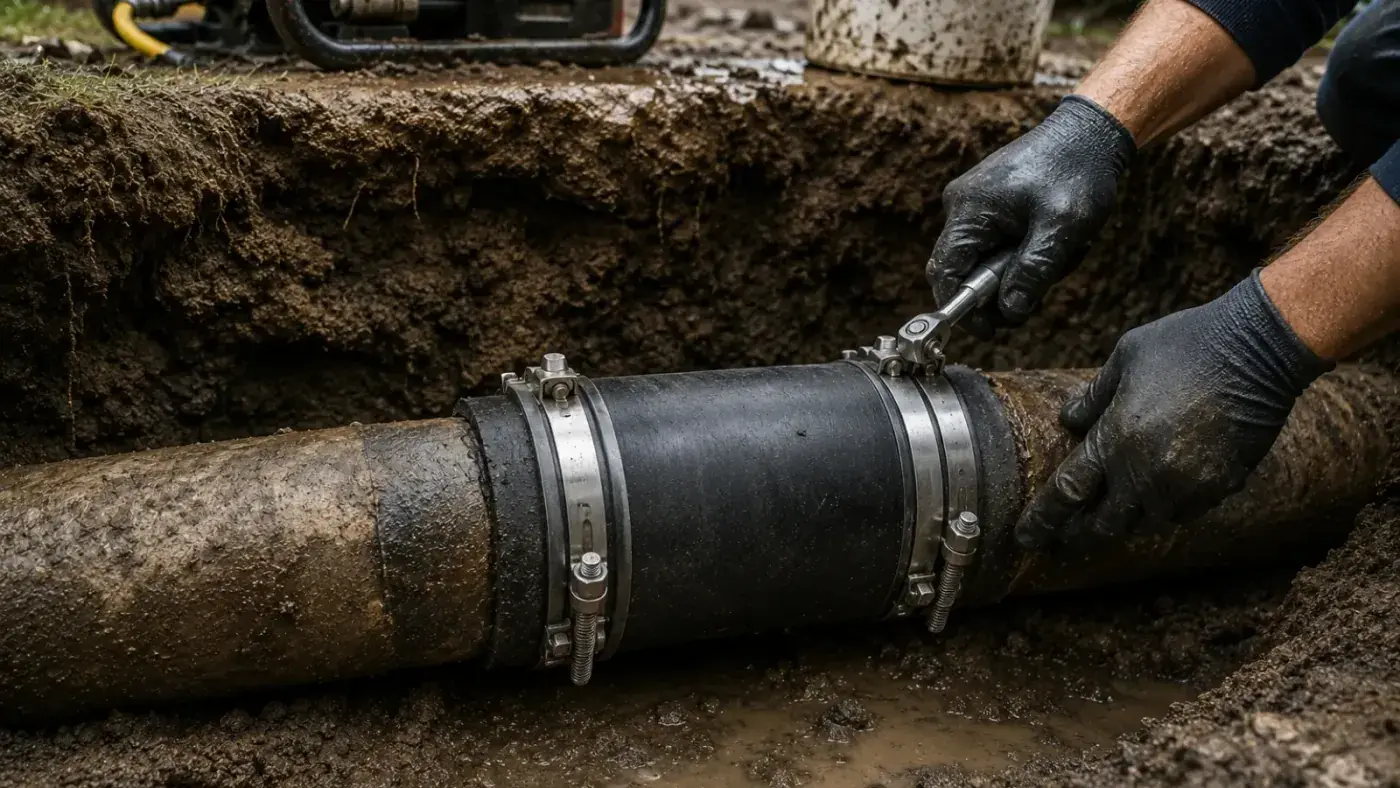
Nashville repair cost is driven by seven local factors: the Metro permitting process runs a standard 5-to-10 business days, slower than Williamson County's cycle; historic overlay districts require extra review; cast iron and Orangeburg pipe in pre-1983 homes drives method selection; urban-core excavation constraints in the Gulch and downtown make trenchless economically dominant; long main-line runs in Belle Meade and Oak Hill amplify cost but also amplify trenchless savings; Metro Public Right-of-Way permits apply if street excavation is required; and traffic control is required for any urban-core excavation. Published figures: a spot repair runs $3,000–$5,000, a full dig-and-replace runs $8,000–$10,000 (80-ft typical residential, depending on depth, transitions, and fittings), CIPP lining runs $180–$200 per linear foot (includes prep — hydro jetting and descaling), and pipe bursting runs $150–$180 per linear foot.
Financing available through Synchrony and Service Finance.
Proof
Local example
A Germantown Victorian-era 1880s home had a failing original clay tile main. CIPP lining rehabilitated the line while preserving the original basement and foundation integrity - no excavation across the historic property. In a separate Belle Meade project, a 1920s estate's cast iron main was replaced via pipe bursting across a 180-foot run in two days, preserving three mature oak trees.
Coverage
We repair and replace sewer lines across Nashville's historic, urban, luxury, and neighborhood properties.
Compliance
A Metro Nashville Water Services permit is required for all sewer lateral and main-line repair, plus a Metro Public Right-of-Way permit for street excavation. Metro Historical Commission review applies to surface work in overlay districts, and the 2009 federal Clean Water Consent Decree framework governs infiltration/inflow scope. Code Title 15 applies to all work. We handle Metro permitting for you; the cycle is typically 5-to-10 business days.
FAQ
Published figures: a spot repair runs $3,000–$5,000, a full dig-and-replace runs $8,000–$10,000 (80-ft typical residential, depending on depth, transitions, and fittings), CIPP lining runs $180–$200 per linear foot (includes prep — hydro jetting and descaling), and pipe bursting runs $150–$180 per linear foot. Urban-core excavation constraints and long estate runs both favor trenchless on total cost. We confirm your exact price after a free camera inspection.
Yes - Metro Nashville Water Services requires a permit for all sewer lateral and main-line repair, plus a Metro Public Right-of-Way permit for any street excavation. Overlay districts may require Metro Historical Commission review. The Metro permit cycle is typically 5-to-10 business days. We pull the permits for you.
The 2009 federal Clean Water Consent Decree commits Metro to reducing infiltration and inflow into the sewer system, which increases pressure on private lateral connection compliance. In practice, that means failing laterals get attention sooner, and documented repairs matter - we build that compliance framework into how we scope and quote.
It does not have to. Trenchless methods like CIPP lining and pipe bursting repair the line from existing access points, preserving protected streetscape. For any surface restoration in an overlay district, we coordinate Metro Historical Commission review so your status is protected.
Yes. Belle Meade and Oak Hill estate laterals can run very long, which amplifies cost but also amplifies trenchless savings versus excavation. In one Belle Meade project, a 180-foot cast iron main was replaced via pipe bursting in two days while preserving three mature oak trees.
Downtown and Gulch repairs depend on access and whether street excavation and traffic control are required, but trenchless methods keep most projects to a few days. Urban-core excavation constraints are exactly why trenchless is economically dominant downtown. We give you a realistic schedule after the camera inspection.
Nashville · 24/7
Free camera inspection with any booked job — and an honest recommendation. Call or text (629) 276-6322.